Well Diffracting Samples
Well diffracting samples are often trivial to peakfind and then index. These well behaved crystals also run fast with most modern peakfinding algorithms. Therefore, the essential question is if this method can match those from more established libraries.
Setting Up (FEL)
As always, we need to provide our expected cell, geometry, and a list file of files to index. We can additionally gather information about the noise model we are creating. probixi will try to read the pixel mask stored in .cxi files and then add other detected misbehaving pixels (if any). For this experiment, let’s go with bacterioRhodopsin.
probixi \
  -i lysozyme.lst \
  -g swissfel.geom \
  -p lysozyme.cell \
  -o lysozyme.stream \
  --device cuda \
  --gif noise_model.gif \
  --enrich-gate
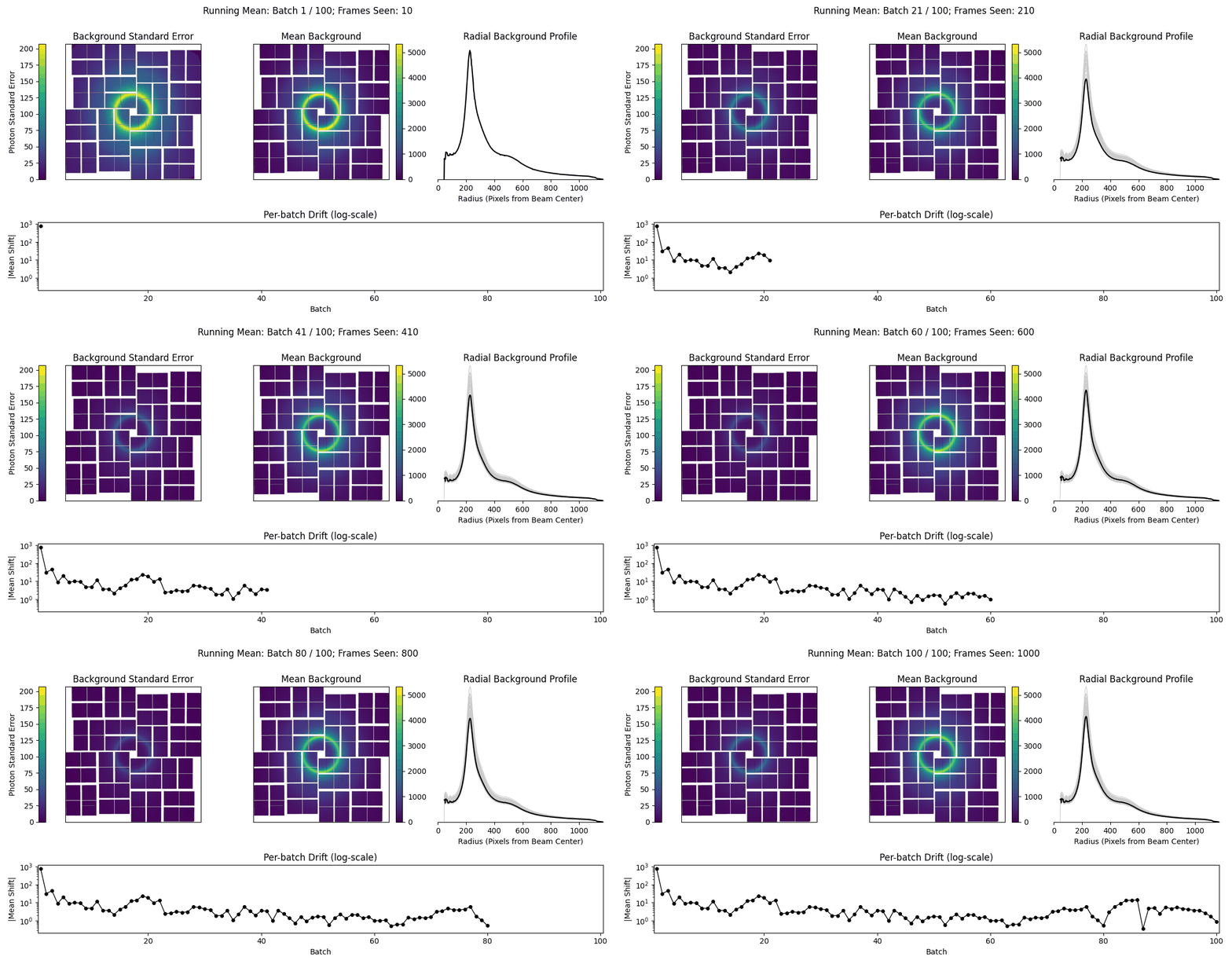
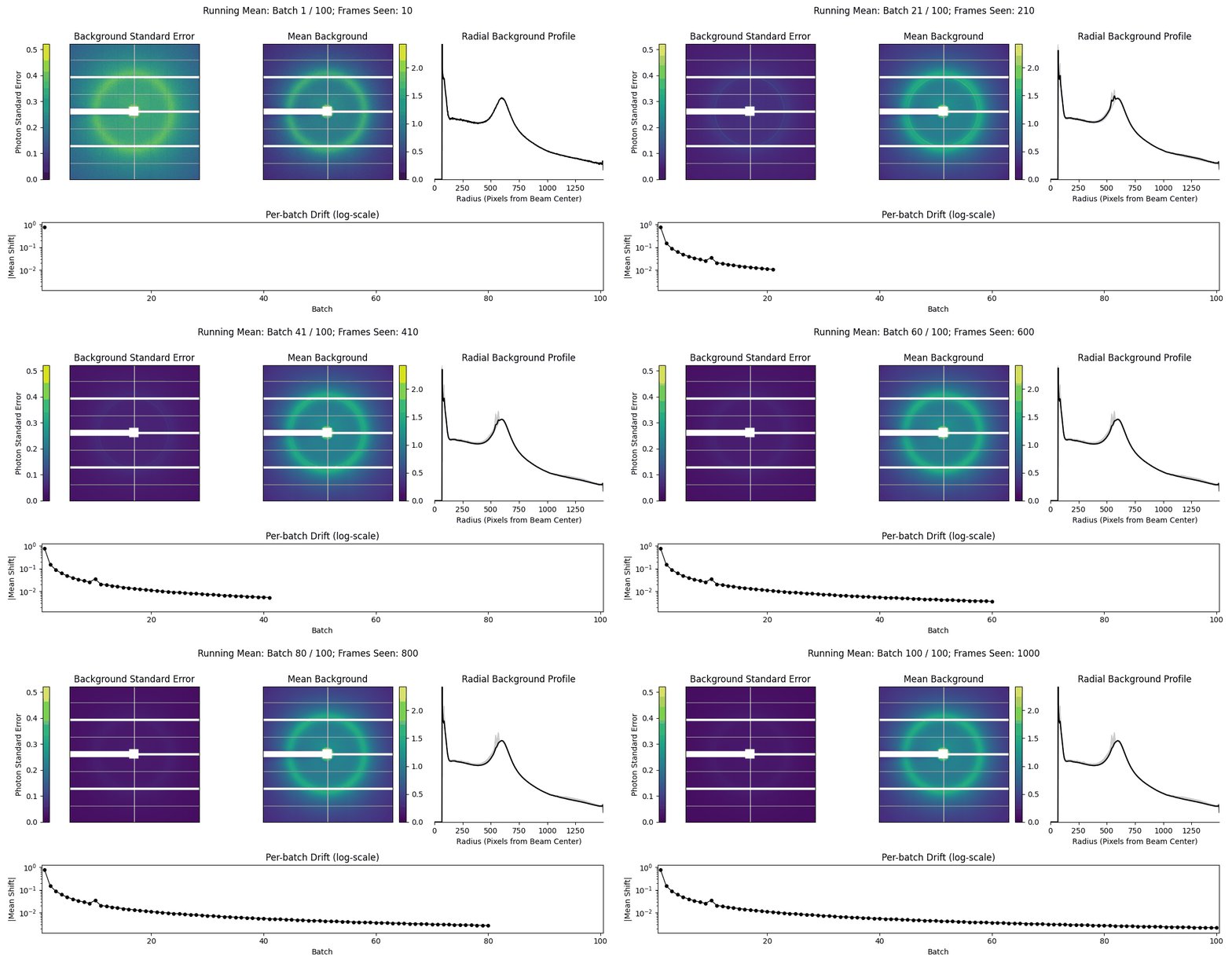
--gif noise_model.gif writes a diagnostic animation of the noise model as it warms over the seed frames — the running mean background, its radial profile, and the per-batch drift. It costs only a few seconds and is the quickest way to confirm the background and the learned dead-pixel mask have settled before you trust the detected peaks. Writing -o lysozyme.stream (rather than a .db) gives a CrystFEL-style stream you can feed straight into partialator/process_hkl next to an indexamajig run, so the two pipelines can be compared one-to-one on the same data.
NOTE: the .stream format may be deprecated in the future and exists now to compare end-of-pipeline results.
The enrichment gate
--enrich-gate is the one flag worth reaching for on strong data. Bright, well-diffracting shots produce many peaks, and with that many constraints it is occasionally possible to seed and refine an orientation that fits the peaks yet is not the true lattice – an overprediction that would quietly pollute the merge. The gate is a per-frame significance test that catches exactly this.
After a frame is indexed, probixi predicts the full lattice and asks a simple question of the image itself: of the predicted reflection positions, how many actually land on above-threshold signal? That count (n_bright) is compared to the rate at which any valid pixel clears the same threshold, giving
an enrichment ratio, the bright-rate of predicted spots over the background bright-rate (≈ 1 for a chance/noise indexing, >> 1 for a genuine lattice), and
a Poisson p-value (
enrich_p) — the probability of seeing at leastn_brightbright predicted spots by chance under that background.
--enrich-gate keeps only frames whose p-value falls below --enrich-alpha (default 1e-3); everything else is dropped as not backed by signal beyond chance. Because you are setting a false-discovery level rather than an enrichment cutoff, there is no magic number to retune per dataset — the test calibrates itself against each frame’s own background. That makes it a natural fit for high-fluence FEL data, where it removes misindexed strong shots without touching the good ones. Every predicted frame still carries its enrichment, n_bright, and enrich_p values in the output (see the frames table), so you can inspect or re-threshold the cut afterwards even without the gate enabled.
Setting Up (Synchrotron)
Again, we provide our cell, geometry, and a list of files to index. In similar fashion to above, we can provide --enrich-gate which hones down our results and protects against overprediction. This time, let’s use BacterioRhodopsin taken at the synchrotron.
probixi \
  -i lysozyme_ssx.lst \
  -g synchrotron.geom \
  -p lysozyme.cell \
  -o lysozyme.stream \
  --device cuda \
  --enrich-gate
The calls are identical. Serial synchrotron shots are usually lower fluence than at an FEL, so per-frame signal is weaker. The self-calibrating noise model and detection threshold do that adapting for you. The enrichment gate applies unchanged, still guarding against the occasional overprediction on the strongest shots.